
As a clean energy source, photovoltaic power generation has been developing rapidly around the world. Photovoltaic mounts, which support photovoltaic modules, are crucial. The choice of their foundation types directly affects a project’s construction efficiency, cost, and long-term stability. Based on different ground conditions, the main foundation types for photovoltaic mounts include reinforced concrete independent foundations, reinforced concrete strip foundations, helical steel pile foundations, and reinforced concrete pile foundations. Here’s an analysis of each type:
I. Reinforced concrete independent foundation
This is a traditional foundation type for photovoltaic mounts. that consists of a base plate (cushion layer) and short columns. It resists upward forces through its burial depth and its own weight, spreads vertical loads using its bottom area, and withstands horizontal forces with the friction and side resistance between the foundation and the soil. and It has a simple structure and is widely applicable, but its construction takes a long time.
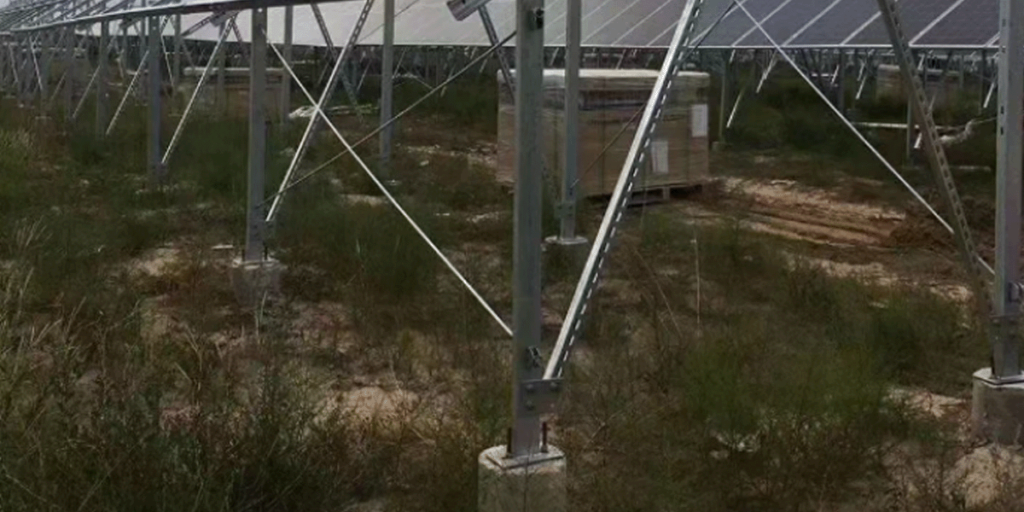
- Advantages:
Its design is clear, and the way it transfers force is straightforward. It can strongly resist horizontal forces like strong winds and floods, and is very stable and reliable in traditional photovoltaic projects. The construction doesn’t rely on special machinery and suits various geological conditions.
- Disadvantages:
It requires a lot of reinforced concrete work. The construction cycle is long, and it causes quite a bit of environmental damage. There’s a lot of earthwork for excavation and back filling, which is time-consuming and labor-intensive. In modern photovoltaic power station construction with high environmental protection requirements, its application is limited.
II.Reinforced concrete strip foundation
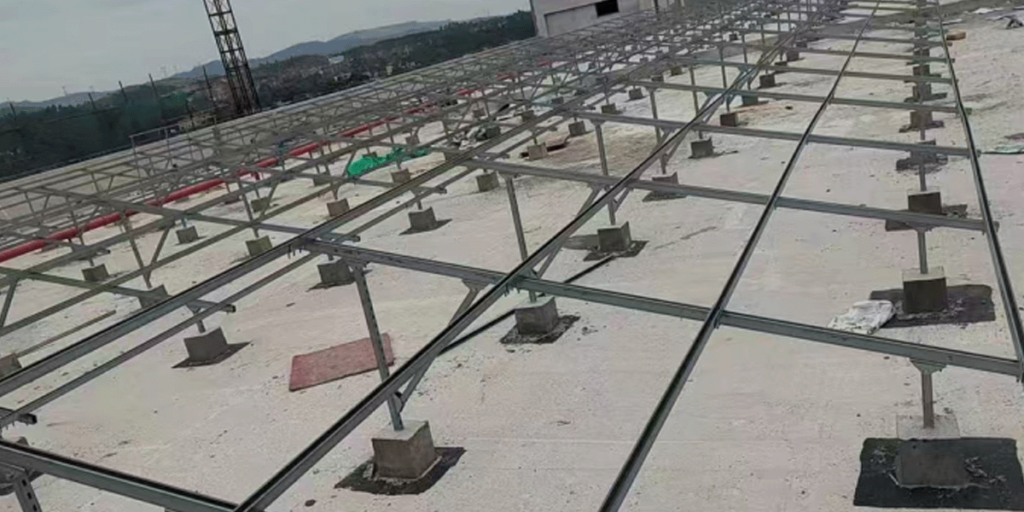
This foundation has foundation beams set between the front and rear columns of the photovoltaic mount. It concentrates the weight in the middle of the columns and provides support through its own weight and a large contact area. It’s suitable for flat areas with low groundwater levels, and its construction process is relatively simple.
- Advantages:
It needs less earthwork for excavation during construction. The construction process is simple and doesn’t need special tools. Compared to independent foundations, it requires less concrete, and the overall construction efficiency is higher, making it an economical option.
- Disadvantages:
It demands relatively flat sites and needs large-scale site preparation. So, it’s not suitable for mountainous or sloping areas. Also, it still needs a fair amount of concrete, has a long curing period, and its limited burial depth means it’s not very good at resisting floods, restricting its use in some situations.
III.Helical steel pile foundation
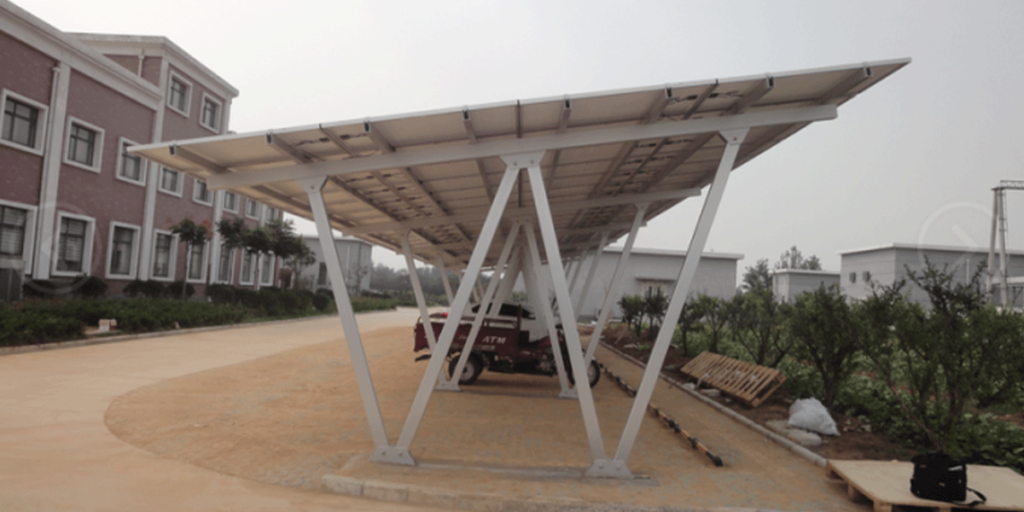
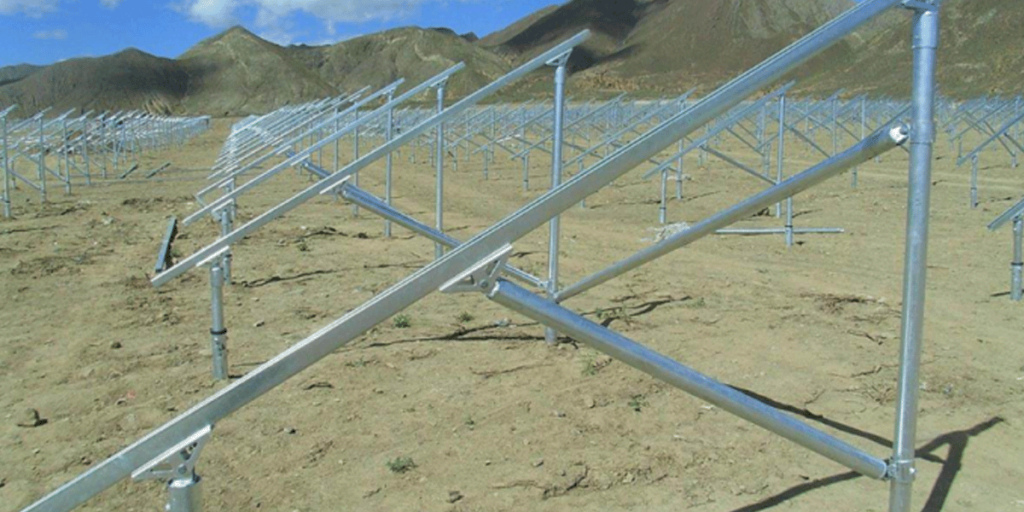
This foundation uses hot-dip galvanized steel pipe piles with spiral blades. They are screwed into the soil by professional machinery. The support comes from the friction on the sides of the piles and the grip between the blades and the soil. It can be built quickly and efficiently, suits various complex terrains, and is widely used in projects that require high environmental protection and construction efficiency.
- Advantages:
The construction is fast. There’s no need for site leveling or large-scale earthwork excavation, which protects the site’s vegetation well. The site can be quickly restored after construction. The height and angle of the piles can be adjusted according to the terrain, showing good adaptability. And it can be reused, which is environmentally friendly. It’s a modern and efficient foundation type.
- Disadvantages:
It requires the soil layer to be relatively dense. If the topsoil is too loose, it will affect its bearing capacity. The piles don’t resist corrosion very well. Even with thickened hot-dip galvanizing, they can’t be used in highly corrosive environments for a long time. Also, the construction needs special machinery, and the initial investment cost is high.
IV.Reinforced concrete pile foundation
This includes two forms: cast-in-place piles and precast piles. Cast-in-place piles are made by pouring concrete on site to form short piles, while precast piles are made in factories and then driven into the soil. Both are suitable for relatively dense soil layers, and each has its own characteristics in terms of construction efficiency and cost.
1.Cast-in-place reinforced concrete pile
- Advantages:
The construction process is simple. Just drill holes, insert steel bars, and pour concrete. It requires less material and is cheap. It’s suitable for areas with silty clay or dense soil layers. It’s flexible in construction and can adjust the length and burial depth of the piles according to the actual geological conditions.
- Disadvantages:
It has high requirements for soil quality and isn’t suitable for loose sandy soil or hard cobblestone soil layers. In loose sandy soil, the holes are likely to collapse, and in hard soil layers, it’s difficult to drill holes, limiting its application range.
2.Precast reinforced concrete pile
- Advantages:
The construction is fast and efficient. The way of driving piles isn’t affected by weather or the site environment, which can significantly shorten the construction period. It’s a good choice for projects that need to be built quickly.
- Disadvantages:
Compared to cast-in-place piles, precast piles are more expensive and need more complex machinery. Although the construction efficiency is high, it may not be suitable for projects with strict cost requirements.
V.Conclusion:
When selecting a foundation type for photovoltaic mounts, consider the project site’s geology, climate, and budget. As construction technology and materials advance, these foundations will be more efficient and eco – friendly, aiding sustainable photovoltaic power projects.
Leon Solar, specializing in solar mount R&D and production, has advantages in foundation design and optimization. It offers diverse solutions and customizes them according to different geological conditions. With advanced production and material technologies, especially in helical steel piles and high – strength mounts, it enhances foundation durability and adaptability.
Leon Solar also focuses on environmental protection, reducing impact through innovative design. It shortens construction time, cuts material waste, and brings long – term economic benefits.
Thanks to its technical and service advantages, Leon Solar is a reliable partner for photovoltaic power station construction. With technology innovation and diverse market demands, it will keep promoting the sustainable development of the photovoltaic industry, contributing to clean energy.


